15.4.14

Jan Oliehoek


Photo manipulations by Jan Oliehoek from Leiden, Holland.

Images were created between 2008 and 2010. All of them have been pieced together from stock photographs.

Oliehoek thinks of his photo manipulation as "a hobby" (Interview by The Design Inspiration, 27.8.2009). Yet, the output is truly professional. Moreover, the inventiveness and suggestive qualities of Oliehoek's hybrid motifs and other surreal configurations are no doubt outstanding.


To paraphrase José Ortega y Gasset, not at all modern and very 20th [21st] century.

And you may ask why. Well, the answer comes from Oliehoek himself: "I try to create images that are both photorealistic and impossible at the same time."


Drat_28, 2010


"I have received some comments on my animal hybrids by people who associate them with genetic manipulation. I even once received a very long message from someone who accused me of playing God and asked me to stop it. For me it’s very simple: I like making pretty pictures. I’m more interested in photo manipulation than genetic manipulation nowadays." —Jan Oliehoek (2009).

Croggy, 2008


"Looking through my own work, I have to conclude that almost all of them are a bit bizarre. I want my images to be eye-catching and I like making people do a double take when they look at them." —Jan Oliehoek (2009).

Chestnut Eye, 2008

Believe it or not.

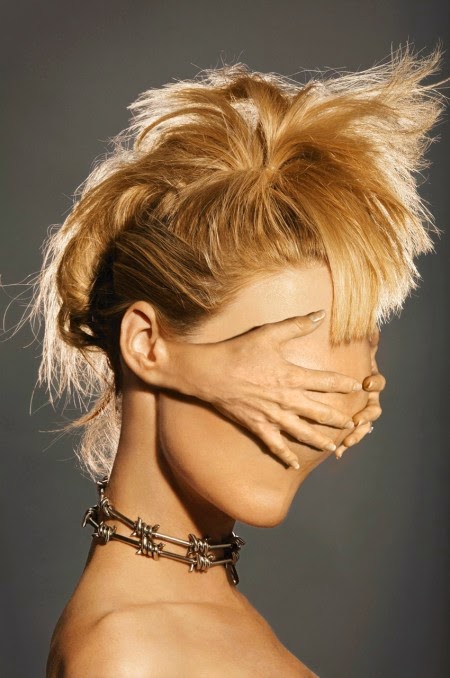
Pregnant Head, 2008
Remarkable example of the now you see me, now you don't phenomenon in the visual arts.

The title of this image might be "Inclusion".


Handgun


Dream House, 2008

Making Friends, 2010

The Netherlands, Creators, Visual art, Photo manipulation, Digital art, The Imaginary, Fantasy, Surrealism, Contemporary grotesqueness, Bestiary, Hybridity, 21st Century. Image research, selection and sequence by Mariano Akerman.

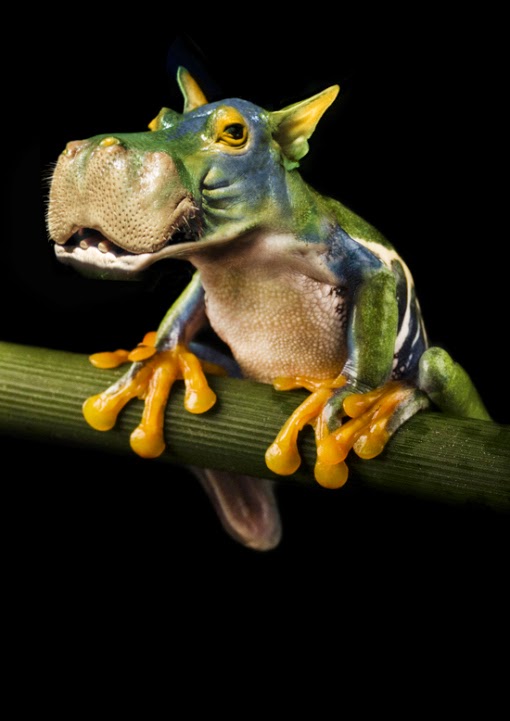
Frog Hippo
Science & Vie Junior, Issue 240, France, August 2009

7.4.14

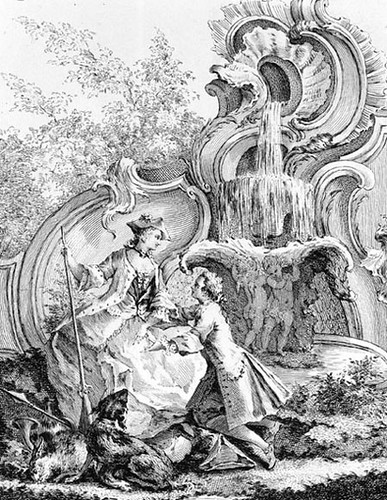
Rocaille


Jean-Jacques Hubert
Ornement rocaille avec cascade
1739
Beaux-Arts Paris

P.P. Bacqueville
Arabesque à la Jean Bérain | Panneau à motifs chinois
early 18th-century print
Ref. Pagodes et dragons : exotisme et fantaisie dans l'Europe rococo; Chinoiserie
Beaux-Arts Paris

Rocaille Landscape
French engraving, 18th century

Mondon: Rocaille Fountain Design, 1733
sanguine
Beaux-Arts Paris

rocaille
Jean Mondon, Le Galand Chasseur, Paris, 1736
Engraving on paper
The Metropolitan Museum of Art, New York

Rocaille Environment
Jean Mondon le Fils: Two Musicians
Inscr. "Les Terribles Accords" i.e. Dissonance ~ DESAFINADO
Engraving by François-Antoine Aveline, 1736
Woest & Vredig: Het schuim van de droom
Fierce & Peaceful: The Foam of Dream

Hubert
Nouveau livre de forme d'ornemens rocaille
Paris 1743-48
title page engraving
Beaux-Arts Paris

Hubert
Ornement rocaille avec putti
Paris 1739
BAP

Hubert
Vase rocaille avec putti
Paris 1739
BAP

Hubert
Ornement rocaille
Paris 1739
BAP

Jean Mondon le Fils, "Le Sultan de Lachine [sic] avec une Esclave", Quatrième livre de formes ornées de rocailles, cartels, figures, oyseaux et dragons chinois, Paris, 1736
Engraving E4 by François-Antoine Aveline
Beaux-Arts Paris; Victoria & Albert Museum, London

Jean Mondon le Fils, Turquerie dans rocaille, Quatrième livre de formes ornées de rocailles, cartels, figures, oyseaux et dragons chinois, Paris, 1736
Engraving by François-Antoine Aveline
Beaux-Arts Paris; V&A

Jean Mondon le Fils, "Le Sultan de Lachine [sic] avec une Esclave", Quatrième livre de formes ornées de rocailles, cartels, figures, oyseaux et dragons chinois, Paris, 1736
Engraving by François-Antoine Aveline

Alexis Peyrotte
Ornement: rinceau et feuillage rocaille
Engraving by Gabriel Huquier
Paris, c. 1720-1770
Paris, Musée des arts de l'Asie, Pagodes et dragons : exotisme et fantaisie dans l'Europe rococo 1720-1770, février-juin 2007, EX9773 (n° 15).
Beaux-Arts Paris

Chippendale Mirror 1

Chippendale Mirror 2

Chippendale Mirror 3

Jean Pillement
A New Book of Chinese Ornements
London, 1755
Ref. Pagodes et dragons : exotisme et fantaisie dans l'Europe rococo; Chinoiserie
Beaux-Arts Paris

Chippendale Girandole
one of a pair

Johann Georg Hertel (after Jeremias Wachsmuth)
Winter, Rococo Music, Fancy Dress Ball, etching, 1750-60

Johann Esaias Nilson
Neues Caffehaus (New Coffee House), colored engraving, Augsburg, 1756

5.4.14

Capricious


Grotesque motif framed by ornamental letter "O"
Auricular Style ABC, c. 1645-50
Design by Johann Christian Bierpfaff
Libellus Novus Elementorum Latinorum Cum AEneis picturis usui Aurifabrorum inservientib
Hamburg
Engraving by Jeremias Falck
Rijksmuseum, Amsterdam

• Lucas Kilian
Newes Gradesca Büchlein
1607
Suite of ornamental grotesque prints
Rijksmuseum, Amsterdam

Lucas Kilian
Ornamental Grotesque
Engraving "1" from Newes Gradesca Büchlin
Augsburg, Germany, 1607

Lucas Kilian. German engraver from Augsburg, 1579–1637
Victoria & Albert Museum, London
Misteraitch, Tales of the Arabesque, Giornale Nuovo, 6.6.2007
Peacay, Kilian Grotesque Ornament, BibliOdyssey, 22.10.2012
___. NGB Album

Auricular style [Dut. Kwabornament; Ger. Knorpelwerk, Ohrmuschelstil]. Term used to describe a type of ornament popular in the 17th century, characterized by smooth, curved and rippling forms resembling the human ear. This highly plastic style evolved during the first two decades of the 17th century in Utrecht, and in its fully developed form is found only in metalwork. The style in this medium is characterized by the use of amorphous, lobate scrolls and embossed, relief ornament that emphasize the malleable nature of the metal. At its most extreme, it exaggerates this quality by suggesting that objects were modelled in a semi-molten state. The goldsmiths Adam van Vianen and Paulus van Vianen of Utrecht are credited with the invention of the style, although its origins seem to lie in the graphic designs of such 16th-century Italian Mannerist artists as Giulio Romano (?1499-1546) (e.g. Drawing for a fish-shaped ewer; Oxford, Christ Church) and Enea Vico. The latter's designs for plate were published in the mid-16th century and may have been known in Utrecht (W.K. Zülch, Enstehung des Ohrmuschelstils, Heidelberg, 1932; The Concise Grove Dictionary of Art, Oxford UP, 2002; The Grove Encyclopedia of Decorative Arts, ed. Gordon Campbell, Oxford UP, 2006, Vol. 1, pp. 57-58; Oxford Grove Art).

The auricular style, German Knorpelwerk or Ohrmuschelstil, Dutch kwabornament, was a 17th-century ornamental style based on parts of the human anatomy. It was invented in the early 17th century by Dutch silversmiths and brothers Paulus and Adam van Vianen. Paulus was inspired by anatomy lectures he attended in Prague, and both he and Adam became known for the style. The auricular style was adopted by other cabinetmakers and carvers in the Low Countries and Germany.
Applied to chair backs, frames, cupboards, and other surfaces, the gruesome, curving motifs consisting of bones, membranes, and cartilage were arranged in arabesques, particularly in forms that suggested the human ear, after which the style is named. The flabby, fleshy forms were sometimes contorted into masks, as shown in the Neues Zieratenbuch (New Ornamentation Book) of the Mannerist designer Friedrich Unteutsch of Frankfurt am Main (Encyclopaedia Britannica).

Oleaginous style. C17. Precursor of Rococo, called Auricular, Cartilaginous, Dutch Grotesque, Kwabornament (Lobed Ornament), or Lobate style, a branch of Mannerism. It consisted of smooth flowing lines, folding in on each other, like human ears, intestines or marine plants. It was invented in The Netherlands, was disseminated in a series of illustrated books, e.g. Veelderhande Nieuwe Compartemente (Many Kinds of New Ornamental Parts--1653), a set of engravings after Gerbrand van den Eeckhout (1621-1674), and Cartouches des différents inventions (Cartouches of Different Designs--c. 1620-30), by Daniel Rabel (c. 1578-1637). Its chief protagonists were Paul (c. 1570-1613), Adam (1569-1627), and Christianen (1600-67) van Vianen, and Jan Lutma the Elder (1584-1669) and Younger (1624-85 or 89) (James Stevens Curl, A Dictionary of Architecture and Landscape Architecture, Oxford UP, 2006, pp. 535-36).

Kwabornament. Een hoogtepunt in de hamer- en drijfkunst vormde de kwabornamentiek. Deze siervorm was hoofdzakelijk geïnspireerd op de fysionomie van zeedieren bestaande uit het vermeende kraakbenen skelt met daaromheen kwabben. Het kwabornament ontwikkelde zich in de maniëristische periode van de renaissance, tegen het einde van de 16de eeuw in de Nederlanden. In de daaropvolgende barokstijl werd het in ruime mate toegepast bij allerlei vormen van decoratieve kunst, met name in zilver. De beroemdste meester van het kwabornament was Paulus van Vianen, die vrijwel werd geëvenaard door Johannes Lutma sr. en jr. en Thomas Boogaert (Elseviers groot antiekboek, Amsterdam: Elsevier, 1978; Frans L.M. Dony, Handboek antiek, Baarn: Tirion, 1988; Antiek Encyclopedie).

Kwab-Ornament, alte Bezeichnung für Ohrmuschelstil. Wenzel Jamnitzer u. die Nürnberger Goldschmiedekunst 1500-1700, Kat., München 1985, S. 512 (Das grosse Kunstlexikon von P.W. Hartmann).

Ohrmuschelstil, Ornamentform des Barock, die von ca. 1620-1660 vor allem in Deutschland und den Niederlanden gebräuchlich war. Der aus dem Knorpel-, Beschlag- und Rollwerk hervorgegangene Ohrmuschelstil setzt sich aus symmetrischen, wulstig geschwungenen Formen und ohrmuschelartig auslaufenden Voluten zusammen. Die englische Bezeichnung ist Auricular style, von lateinisch auricula, "Ohrmuschel".
W. K. ZÜLCH, Die Entstehung des Ohrmuschelstil, Heidelberg 1932; A. M. v. GRAEVENITZ, Das niederländ. Ohrmuschelornament. Phänomen und Entwicklung, dargestellt an den Werken und Entwürfen der Goldschmiedefamilien van Vianen und Lutma, Diss. München 1972, Bamberg 1973 (Das grosse Kunstlexikon von P.W. Hartmann).

With its cartilaginous undulations and weird orifices, the style of ornament known as "auricular" has been associated both with the grotesque tradition in print and with the advancement of anatomical knowledge in the seventeenth century. This paper investigates the long-posited though rarely substantiated claim that auricular ornament was inspired in part by anatomical dissections performed in seventeenth-century Holland. Discussing auricular objects (furniture, silver, and prints) in relationship to anatomical works (paintings of anatomies, fleshy still lifes, and illustrations to surgical texts), I more precisely articulate the nature of these strange correspondences between body and ornament. Are auricular, Ohrmuschelstil, and kwabornament merely formal terms modern scholars have applied to the style called in its day "pranks and maggots"? Or do they instead capture something of the style's origins, intuiting its significance for the seventeenth century? (Allison Stielau, "Pranks and Maggots: The Anatomy of Auricular Ornament", Paper presented at the annual meeting of the RSA Annual Meeting, Hilton Montreal Bonaventure Hotel, Montreal, Quebec Canada, 10.1.2014; Allacademic).


• Michiel Mosijn | Michel Mosyn of Amsterdam
Designs in auricular style
c. 1620
Engraving by C. Dankers
Désiré Guilmard, Les maîtres ornemanistes, 1880-1

Michel Mosyn
Designs in auricular style
Holland, c. 1620

Michel Mosyn, sculptor and engraver from Amsterdam, active c. 1620-80
• Also known as: Mosyn, Michiel; Mosijn, Michiel; Moseijn, Michiel; Mousyn, Michiel; Mozijn, Michiel; Mouzyn, Michiel; Mosin, Michel; Mouzijn, Michiel.
• Rendered as a set of engravings, many of his designs were published as Veerlerhande Niewe Compartemente, Amsterdam, 1640-1655. The work also involves Gebrand van Eeckhout (engraver) and Clement de Jonge (publisher).
• Rijksmuseum: Kwabornament
• V&A: 1, 2, 3, 4
• Imaginarium: Auricular Style

Jeremias Falck, German engraver from Gdansk, 1609-1677
Rise of the Living Type, BibliOdyssey, 10.5.2012

Additional Resources
Rijksstudio Akermariano
Auricular Style, Kwabornament, V&A, Rijksmuseum, Museumnetwork, Old Book Illustrations, BibliOdyssey, Framing Charles II, Victorian jug, DeVille.
The Grotesque Times

24.3.14

Artists & Entries


Artists
Akerman, Mariano
Bacon, Francis
Bak, Samuel
Beksiński, Zdzisław
Bérain, Jean
Boilly, Louis-Léopold
Bolten, Arent van
Bruegel the Elder, Pieter
Callot, Jacques
Chapman Brothers, Jake & Dinos
Clovio, Giulio
Coquelin, Antoine
Desprez, François
DeVille, Julia
Delvoye, Wim
Doré, Gustave
Dubuffet, Jean
Ernst, Max
Fischli und Weiss
Floris, Cornelis
Fontanarrosa
Fuller, Timothy Jacob
Genovese, Alfredo
Gervasi, Elvio
González, Jesús
Goya y Lucientes, Francisco
Gravina, Francesco Ferdinando Il
Hoefnagel, Joris
Inga, Javier
Kertész, André
Kuksi, Kris
Lequeu, Jean-Jacques
Mäetam, Marko
Maschen, Santos
Marin, Livia
Menasché, Sergio
Messerschmidt, Franz Xaver
Nine, Carlos
Nowak, Till
Oliehoek, Jan
Ovchinnikov, Alexander
Petitot, Ennemond-Alexandre
Picasso, Pablo
Piranesi, Giovanni Battista
Quino
Raphael
Reinhardt, Ad
Riccardi, Fabrizio [+]
Salviati, Francesco
Santos, Carlos
Slarner, Liliana
Tanguy, Yves
Verona, Cachi
Weber, Andreas Paul
Wolverton, Basil
Yamaguchi, Yuka


Entries
A Curate's Egg
A la búsqueda del factor grotesco
A Procession of Grotesques
Acerca de lo Grotesco en las pinturas de Bacon
Alcances del sentimentalismo artístico
Ars Poetica
Arte argentino
Arte grotesco: algunos de sus alcances
As Funny as It Gets
Art as Intention in Context
Art Matters: Ideas & Themes Illustrated
¿Arte o Gato por Liebre?
Artistic Imagination
Artistic Monsters
Aspectos grotescos del arte de Bacon
Asunto de 6.000.000
Atypical Beings
Auricular Style
Bacon: Painter with a Double-Edged Sword
Bakhtin: The Body Grotesque
Banham y la estética del colectivo porteño
Best Regards to Medusa?
Bien complejo y bien porteño
Books: The Grotesque and Its Relatives
Bretagne fantastique
Buraq
Capricious
Chair-Ladder
Clavileño el Alígero
Configuraciones grutescas
De la mímesis como problema
De monstruos, prodigios y maravillas
Decoração insólita
Domus Aurea, Rome
Double-Edged
Educar con el ejemplo
El factor grotesco
El firulete, un asunto de importancia medular
El juego de Bacon
El laberinto del fauno
El ser y el trabajo
El todo mezclado
Estética do grotesco: Christoff
Estilo auricular
European Ornamental Prints
Figura en el espejo, 1971
Flora Picturesque
Francis Bacon en Buenos Aires
Francis Bacon y lo Grotesco
Fribolitus fribolitantis
Gigantomachy
Giornale Nuovo
Grotesco el cuerpo
Grotteschi
Grotesques selon l'Encyclopédie Larousse
Grotto-litera-turistika
Hibridaciones varias
Hindu Deities
Historia de la Arquitectura
Imaginary Art
Insuperable en la sátira: Antonio Gasalla
Jugando con fuego
Kafka
Kayser plus Bakhtin
Kuntillet Ajrud
La grottesca
La Revelación según Bak
La tradition des grotesques
Las fuentes hispánicas del arte baconiano
Las inscripciones de los carros
L'écriture des grotesques
Les Luthiers
Les songes drolatiques de Pantagruel
¿Lo bello que en lo feo o lo feo que en lo feo?
Lo familiar vuelto inquietante
Lo Grotesco en las pinturas de Bacon
Lo Grotesco en las pinturas instintivas de Bacon
Lo imaginario
Maniérisme : rébellion mélancolique
Masquerade: Somewhere between the Mask and the Face
Media and the Grotesque
Medieval Grotesqueries
Medieval Imagination
Mi linda maestra
Montaigne: Boscage or Crotesco
"Multiplica las sonrisas"
Netherlandish Realities
¿No es acaso el árbol un hombre?
"No Grotesques in Nature"
O fator grotesco
O grotesco
O grotesco nas artes visuais
O império do grotesco
Of Purpose in 20th-Century Art
Ornament and the Grotesque
Ortega y Gasset sobre la Metáfora
Painters and Poets Alike
Paradoxical Times
Popular Science: Grotescology
Quiebre y Derrame
Resources
Resourceful Jahsonic
Rocaille
Sacred Hybrid
Shell and Content
Significado de "A la que te criaste"
Sólo nos es segura la inseguridad
Terminología de las artes plásticas
The Child Catcher
The Creole Arabesque - El firulete criollo
The Fear Factor
The Fictitious Image
The Grotesque
The Grotesque in Bacon's Paintings
The Grotesque in Bacon's Paintings, 1999-2009
The Grotesque in Twentieth Century Art
The Hour of Jeanne d'Évreux
The Human Body in Modern Art
The Macclesfield Psalter
The Paradoxical
The Uncanny
Theatrical Murder
Transgressing the Boundaries
True Monsters
T.S. Eliott, "The Hippopotamus," 1925
T.S. Eliott, "The Hollow Men," 1925
Um estilo marginal
Versatilidad
Viva la mezcla
Viva la muerte


Bookmarks & Resources
Bibliography
Favorite Resources
Grottesca
Grotesco Online
Links
The Grotesque Times

21.3.14

Cornelis Floris

1508-1575

A Mannerist Netherlandish artist, Floris developed a bizarre set of designs featuring mascarons grotesques in 1555.[1]

Cornelis Floris, Grotesque Ornamental Mask (Mascaron), Antwerp, 1555
Etching by Frans Huys
Wolfsburg Kunstmuseum

In 1555, Floris designed between 18 and 22 sheets with human faces made up from vegetal elements, some highly stylized, others still recognizable as leaves and fruits. The images merge the animal and vegetable realms, and also the living and nonliving. Floris' designs intermix classical and not-so-classical components in most unexpected and extravagant ways.

Floris, Mascaron "i", Antwerp, 1555
Engraving by Huys
From: Pourtraicture ingenieuse de plusieurs façon de Masques. Fort utile aulx painctres, orseures, Taillieurs de pierres, voirriers et Taillieurs d'images (Ingenious portrayal of several types of masks. Useful for painters, stoneworkers [and other trades]).

Floris, Mascaron "h", 1555
Engraving by Huys (Pourtraicture ingenieuse).

Floris was born in Antwerp but spent some time in Rome in the late 1530s when he would have been exposed to examples of Ancient Roman and Renaissance grotesque decoration. The grotesque style often featured fanciful creatures--part human, part plant. The prints of Cornelis Floris have been described as having a sinister quality about them. In several of his prints, the combination of the auricular (ear-like) quality of the framework and the presence of individual figures apparently held prisoner by it, does give an unsettling effect (V&A).

Cornelis Floris
Ornamental Grotesque, Print "F", from Veelderleij Veranderinghe van grotissen ende Compertimenten ghemaeckt tot dienste van alle die de Conste beminne ende ghebruiken, Antwerp, 1556.[2]
Etching, 30.7 x 20.9 cm.
Published by Hieronymus Cock
Victoria & Albert Museum, London

The etching series Veelderleij Veranderinghe van grotissen ende Compertimenten are known in English as "Many Variations of Grottoes and Compartments."

Associated terms: putti, festoons, strapwork, shell motif, fantasy, snail, Auricular Style, imprisonment, Mannerist art.

Floris was a pioneer of the Auricular Style, which was to reach its a peak only in the 17th century.[3]

Johannes Lutma, Cartouche auriculaire, Amsterdam, 1633-54.
BnF, Paris.[4]

References
1. Incomplete sets of the suite are available from Amsterdam Rijksmuseum and MAK Vienna (Ornamental Prints Online). See also Carsten-Peter Warncke, Die ornamentale Groteske in Deutschland, 1500-1650, 2 vols., Berlin: Verlag Volker Spiess, 1979.
2. Désiré Guilmard, Les maitres ornemanistes : dessinateurs, peintres, architectes, sculpteurs et graveurs, Paris: E. Plon, 1880-81, p. 477 no. 6; Berlin Staatliche Museen, Katalog der Ornamentstichsammlung, Berlin and Leipzig, 1936-39, no. 211.1; Peter Ward Jackson, "Some Main Streams and Tributaries in European Ornament from 1500 to 1750", VAM, London, Victoria and Albert Museum, 1969, 38.
3. Auricular describes the smooth, curved, rippling and pliable shapes that resemble a human ear. Floris' prints are very early examples of this type of ornament which was developed by goldsmiths attempting to demonstrate organic forms extruding from the surface. The style probably influenced the later Baroque and Rococo movements: in various of his designs, Floris incorporates abstracted zoological motifs, in most cases relating to the ocean.
4. Guilmard, Maîtres ornemanistes, vol. 2, pl. 16.

Online Resources
• Misteraitch, Giornale Nuovo: Faces of the Grotesque, 2006
• Peacay, BibliOdyssey: Grotesque Mask Heads, 2011
• Akermariano, Imaginarium: Masquerade, Somewhere between the Mask and the Face, 2011
Related Posts Plugin for WordPress, Blogger...